How to Properly Maintain a Foam Roof in Arizona
Home / Azul Blog / How to Properly Maintain a Foam Roof in Arizona A Homeowner’s Guide to Maximizing Lifespan, Performance, and Protection Spray polyurethane foam (SPF)...
9 min read
Timber Luketich, Project Manager : Updated on March 20, 2026
Home / Azul Blog / How to Properly Maintain a Foam Roof in Arizona
Spray polyurethane foam (SPF) roofing systems are one of the most durable, energy-efficient, and cost-effective roofing solutions available—and an extremely popular option here in Arizona.
But like any high-performance roofing system, a foam roof is not a “set it and forget it” investment. A properly cared for a foam roof can last more than 25 years. Occasional maintenance is the difference between a roof that lasts 10–15 years and one that performs reliably for many decades.
At Azul Roofing Solutions, we’ve seen both sides. We’ve seen well-maintained foam roofs continue to perform beautifully decades after installation—and neglected systems that have deteriorated much faster than homeowners expected.
This guide will walk you through exactly how to maintain your foam roof the right way—so you protect your home, your investment, and your peace of mind.
Read More: Best Roof Types in Arizona for Homes and Businesses
Arizona is one of the harshest roofing environments in the country. What’s more, the need for a well-insulated and properly functioning roof is critical to surviving our extreme summer heat.
Between:
Your roof is under constant stress, but the good news is that foam roofing systems are uniquely well-suited to for this environment because they:
Even with all of those benefits, foam roofing systems do have a surprising Achilles heel. The protective coating on top of the foam—typically an elastomeric coating—is what shields the system from UV degradation and serves as your roof’s first line of defense. Like sunscreen in the Arizona sun, elastomeric coating doesn’t last forever and must be maintained to ensure that the materials underneath are fully protected from Arizona’s relentless sun.
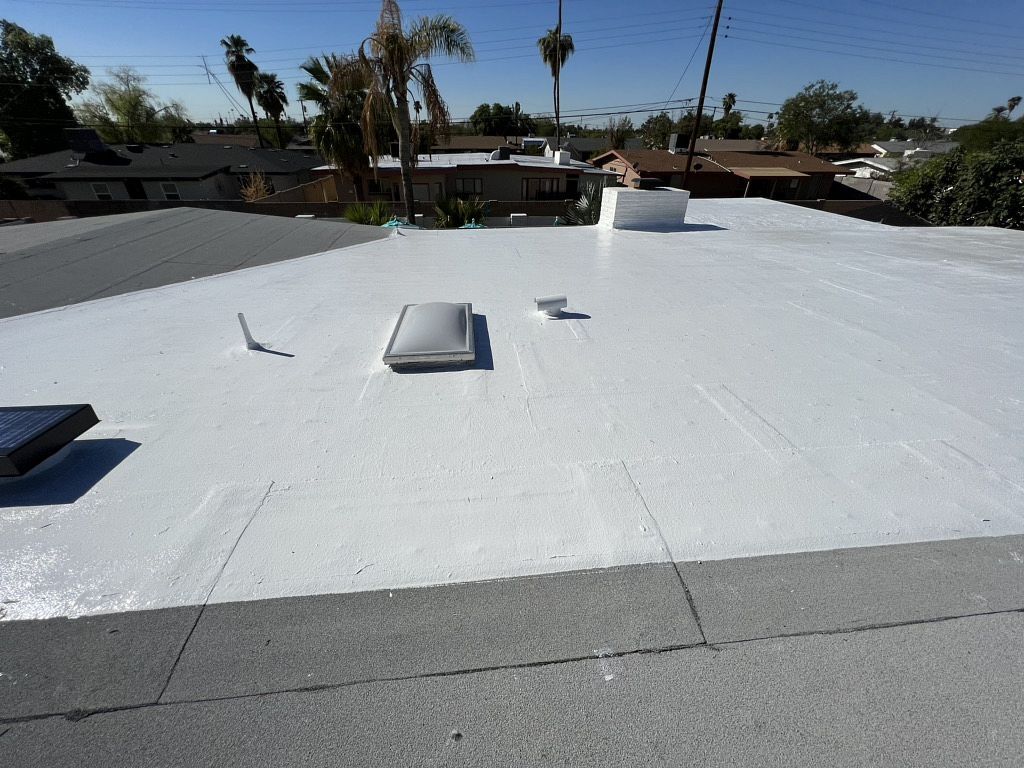
Before we talk about maintenance, it’s important to understand what you’re maintaining. Let’s take a closer look at the three main layers that comprise a foam roof. While different systems may vary slightly, most foam roofing systems consists of three layers:
This is your existing roof surface (tile, flat roof deck, etc.) that the foam is applied to.
This is the insulating, waterproof layer that forms a seamless and pliable barrier across your roof. The foam itself is extremely durable—but only when it’s properly protected by the coating.
Usually silicone or acrylic, this top layer protects the foam from UV rays, water, and physical wear. Once that coating begins to wear down, the foam underneath becomes vulnerable.
That’s why maintenance is all about protecting and renewing that top layer.
A well-installed foam roof is designed to perform for decades—but only with consistent, proactive maintenance. At a minimum, every foam roofing system should be inspected annually to evaluate the condition of the protective coating, identify early signs of wear, and ensure drainage is functioning properly. Recoating is typically required every 5–10 years depending on environmental exposure, roof traffic, and the type of coating used.
In Arizona’s extreme climate, however, a more proactive approach is critical. We generally recommend:
Waiting too long to recoat is one of the most common—and costly—mistakes homeowners make. Once the protective coating begins to fail, the underlying foam becomes vulnerable to UV damage and water intrusion, turning what could have been routine maintenance into a much more expensive repair.
The most important thing you can do is have your roof inspected by professionals who understand foam systems and know the signs of trouble to look out for. Generally, a proper foam roof inspection will look at:
At Azul Roofing, our inspections are designed to identify small issues before they become costly problems. If a minor repair is all that’s needed, we’ll provide a clear estimate for that. And if a full re-roof is the better long-term solution, we’ll walk you through that option with the same level of transparency.
Arizona’s dust, leaves, and debris can accumulate quickly—especially after monsoon storms. While it may seem harmless, even small amounts of buildup can have a compounding effect on your roof’s performance over time. Debris traps moisture against the surface, accelerates the breakdown of the protective coating, and can block proper drainage—leading to ponding water and premature wear.
Beyond moisture concerns, debris can also attract unwanted pests. Birds, rodents, and other wildlife are naturally drawn to areas where debris collects, particularly around roof penetrations, HVAC units, and drainage points. Over time, this can lead to nesting, chewing, and physical damage to the coating or underlying foam. Once animals begin to interact with the roof surface, what starts as a minor issue can quickly turn into a repair situation.
Why this matters:
Best practices:
Keeping your roof clean isn’t just about appearance—it’s a critical part of protecting the system from both environmental wear and preventable damage.
Foam roofs are built for durability, but they are not designed to handle frequent or unnecessary foot traffic. Unlike traditional roofing materials, foam can compress under repeated weight, and the protective coating can wear down through the friction of shoes. Over time, this creates vulnerable wear spots that are more susceptible to UV degradation and even water intrusion.
This is especially important for homes with rooftop equipment such as HVAC units, solar systems, or satellite installations. Service providers who are unfamiliar with foam roofing may unintentionally cause damage simply by walking on the roof without taking proper precautions.
Why this matters:
Best practices:
A small amount of prevention here goes a long way with a foam roof. Managing foot traffic helps preserve the integrity of both the coating and the foam beneath it.
Foam roofs are seamless and water-resistant, but they are not intended to hold standing water for extended periods. Ponding water—which is water that remains on the roof for more than 48 hours after a rain event—can significantly accelerate the deterioration of the protective coating.
In Arizona, even though rainfall is infrequent, monsoon storms can drop large amounts of water in a very short period of time. If your roof has low spots or drainage issues, these areas can become recurring problem zones that degrade faster than the rest of the foam roof around it.
Why this matters:
Best practices:
Water is one of the few things a foam roof doesn’t tolerate well over time—especially when it sits. Managing drainage is critical to long-term performance, particularly during Arizona’s monsoon season when heavy rains can overwhelm drainage systems. Just as quickly, intense sun can cause that water to evaporate before issues are visible. That’s why monsoon season is an ideal time to identify drainage problems while they’re actively occurring.
A big benefit of foam roofing is that it’s highly repairable—but timing matters. Small issues like hairline cracks, surface wear, or minor impact damage can typically be addressed quickly and affordably. Left alone, however, these small defects can expand quickly under Arizona’s intense UV exposure and damaging temperature fluctuations.
Early intervention is what keeps maintenance simple and cost-effective. Once damage progresses to the point where foam is exposed or water begins to penetrate the surface into the foam layer, repairs become more involved and more costly.
Why this matters:
Best practices:
The goal is simple: fix small problems while they’re still small. Ignore them and risk a significantly larger repair bill.
Renewing the protective coating is the single most important step in extending the life of a foam roof. The protective coating is what shields the foam from UV radiation, water exposure, and physical wear. Over time, this coating naturally degrades—but if it’s renewed before failure, the underlying foam can remain largely intact for many years.
Sadly, many homeowners wait too long to evaluate the condition of this critical layer, allowing the protective coating to wear down and expose the foam underneath to UV and moisture. At that stage, what could have been a straightforward recoat may require more extensive repairs or partial replacement.
Why this matters:
Best practices:
A well-maintained foam roof can be renewed again and again. Recoating isn’t a cost—it’s an investment in longevity.
Not all roofing contractors are experienced with foam systems, and that matters more than most homeowners realize. Foam roofing requires specialized knowledge—not just for installation, but for inspections, repairs, and recoating. Using the wrong materials or techniques can compromise the entire roof and every layer—in some cases even voiding warranties.
In Arizona’s demanding climate, expertise is essential. Roofs here deal with unique conditions that are unlike most of the rest of the country. The difference between an Arizona roof that lasts decades and one that fails early often comes down to who is maintaining it.
Why this matters:
Best practices:
At Azul Roofing Solutions, foam roofing isn’t a side offering—it’s a core specialty. Our approach is built around long-term performance, not short-term fixes, so your roof continues to protect your home for decades.
Read More: 5 Important Questions to Ask Your Roofing Contractor
If you’re unsure about your roof’s condition, here are some key signs that it may be time for maintenance or further evaluation:
If you notice any of these, it’s time for an inspection and very likely, a repair.
One of the biggest advantages of a foam roofing is its longevity. Unlike many traditional roofing materials that have a fixed lifespan, a properly installed and maintained foam roof can be renewed over time—making it one of the most sustainable and cost-effective roofing options available.
With proper maintenance and regularly recoating, a foam roof can last 20–30 years or more. In many cases, the underlying foam layer remains fully intact for decades, with the system’s lifespan extended dramatically through proactive inspections, early repairs, and regular recoating.
Without maintenance, however, the story changes quickly. If the protective coating is allowed to wear down and expose the foam to UV radiation and the elements, deterioration can accelerate dramatically—reducing the lifespan to 10–15 years or less and potentially leading to more extensive repairs or even premature replacement.
The difference comes down to one simple principle:
Foam roofing isn’t a disposable system—it’s a renewable one. With proper maintenance, it can continue to perform year after year, avoiding the cycle of tear-offs and replacements that come with more traditional roofing materials.
Read More: Which Type of Roofing Material Lasts the Longest in Arizona?
A foam roof is one of the best roofing systems you can choose for an Arizona home. But its performance depends on how well it’s maintained.
The formula is simple:
Do that—and your roof can protect your home for decades. Neglect it—and even the best system will fail prematurely. When you’re ready to act—whether it’s routine maintenance or a more urgent concern—we’d be happy to help.
Most foam roofs should be recoated every 5–10 years, but in Arizona’s intense sun, 5–7 years is often ideal to maintain peak performance.
Yes, but it should be limited. Excessive foot traffic can damage the coating and compress the foam. Always use walk pads when possible.
Look for signs like fading, cracks, exposed foam, or ponding water. If you’re unsure, a professional inspection is the best next step.
Absolutely. Foam roofing performs exceptionally well in Arizona due to its seamless design, insulation properties, and resistance to thermal expansion.
Without maintenance, the protective coating will degrade, exposing the foam to UV damage. This can lead to leaks, structural issues, and premature roof failure.
Home / Azul Blog / How to Properly Maintain a Foam Roof in Arizona A Homeowner’s Guide to Maximizing Lifespan, Performance, and Protection Spray polyurethane foam (SPF)...
Home / Azul Blog / Tile Roofs in Arizona: What to Watch for as Your Roof Ages Tile roofs are one of the most popular roofing systems across Arizona—and for good reason. Clay and...
Home / Azul Blog / Roof Underlayment 101: What It Is & Why It’s Important When most homeowners think about their roof, they picture the tiles, shingles, or foam that cover the top...